The Foundation.
How AEC Firms Can Improve AI Visibility

Length
4 min read
Topic
Articles & Insights
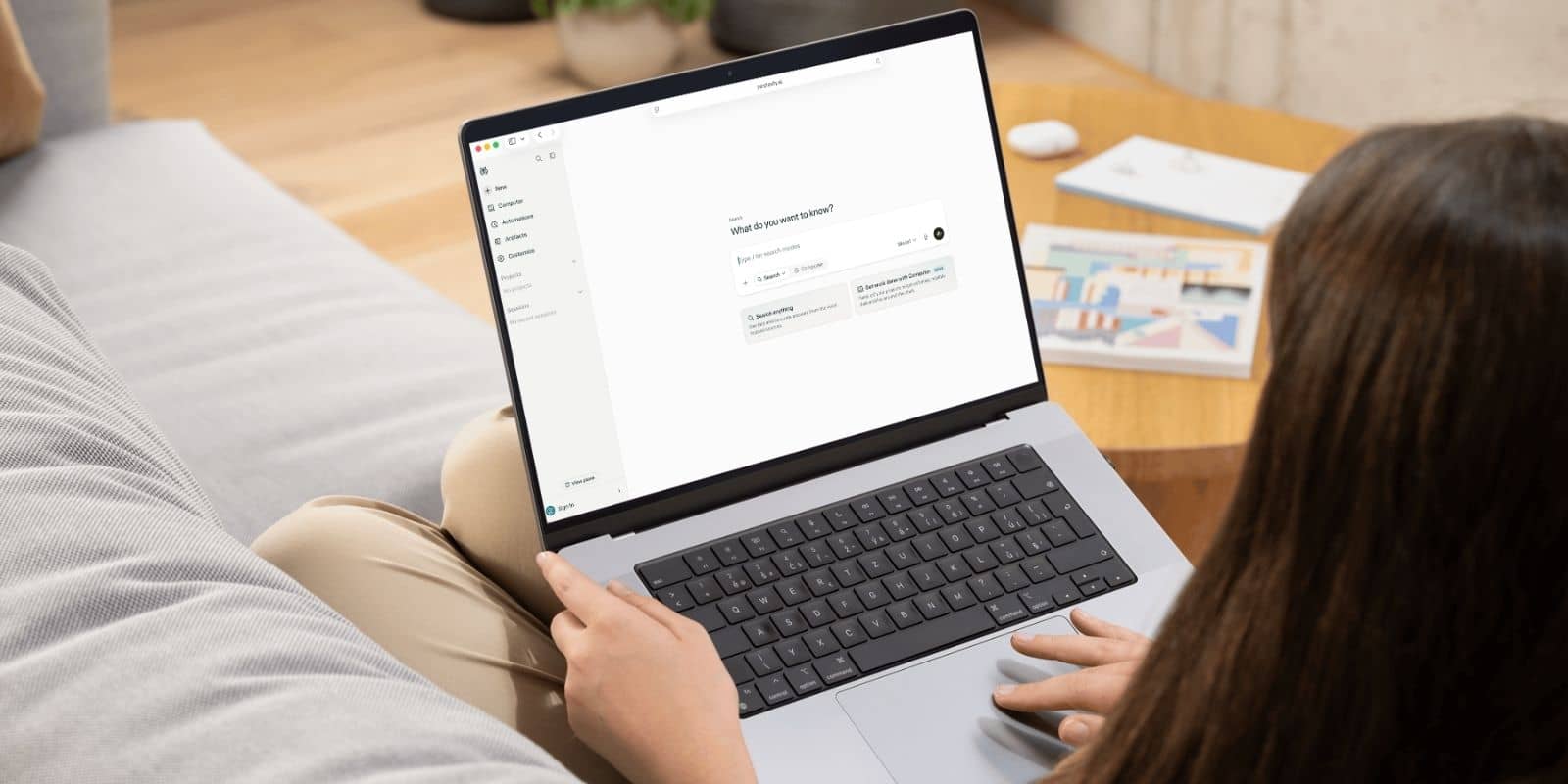
Before a prospective client reaches out to a firm, there’s a good chance they’ve already asked an AI assistant for options.
A facility director might ask ChatGPT for an engineering firm to lead an upcoming renovation. A university planner might ask Claude or Perplexity which construction managers handle campus projects. In seconds, they have a handful of firm names to start their research.
Showing up in those answers is called AI visibility. You’ll also hear it called GEO (generative engine optimization) or AEO (answer engine optimization). There are plenty of technical tactics attached to it, but for architecture, engineering and construction firms, the work starts somewhere familiar: a strong brand and a website that clearly explains what you do.
How AI decides what to say about your firm
AI assistants piece together an answer from everything they can find about you online. Your website, project pages, team bios, industry listings and press coverage all feed that picture. Firms with a clear, consistent story give AI the material it needs to recommend them accurately.
That’s the same foundation that has always helped AEC firms make shortlists. Positioning, messaging and a well-organized website are just as persuasive to an algorithm as they are to a selection committee.
Rankings feed the answers
AI assistants often run their own web searches before responding, so firms that already rank well in Google have a head start. Strong search performance and AI visibility go hand in hand.
MidAtlantic Construction is a good example of building on what’s already working. A decade after we designed their first responsive site, we partnered with them again on a full refresh, focused on intuitive navigation and a mobile experience that serves clients and project teams in the field. If you’re planning a redesign, start by identifying which pages bring in traffic today so that value carries into the new site.

Spell out every service
When AI recommends a firm, it usually pulls from pages that describe a specific service. Broad overviews help, but a dedicated page for each service gives assistants something concrete to point to.
Becker & Frondorf brings owner’s representation and construction cost estimating together under one brand. Their website makes both offerings easy to find through focused navigation and a searchable project catalog organized by industry.
Build a page for every market you pursue
Most AEC firms work across several sectors and regions, and each one has its own set of searches. If healthcare, higher education or mission critical work is a priority, it deserves a dedicated page backed by relevant projects and people.
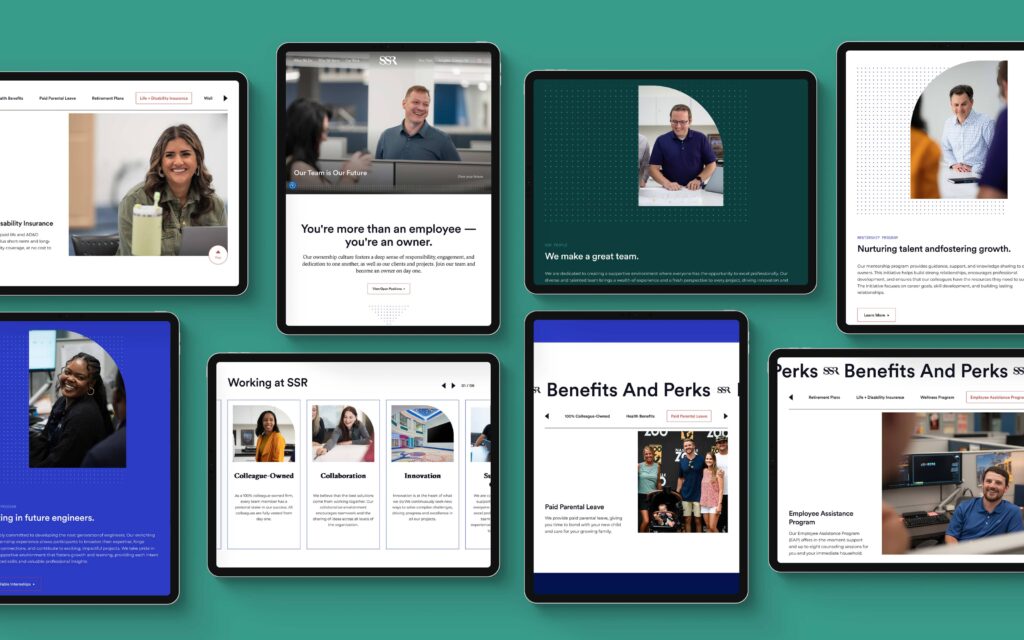
Smith Seckman Reid has 500+ colleagues across 16 locations and serves a wide range of industries. Their site groups services into three core pillars and gives each market its own landing page with tailored services, case studies, testimonials and key staff.
Say exactly what you do
AI responds best to specifics. Building types, sectors, regions, delivery methods and project outcomes give assistants real details to work with. Keeping those details consistent everywhere your firm appears, especially after a merger, rebrand or leadership change, helps AI describe you the way you describe yourself.
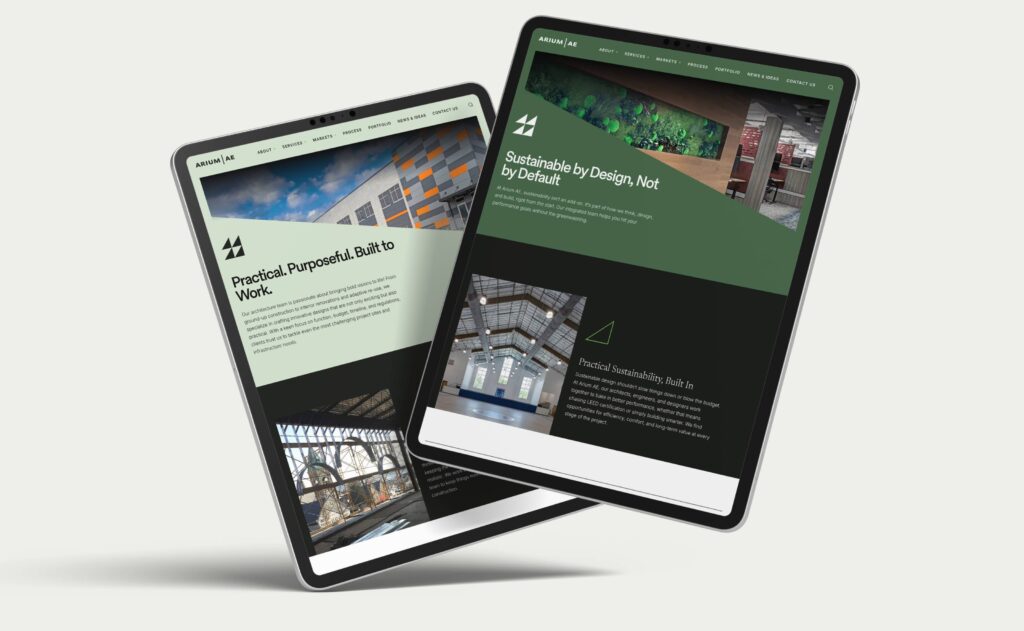
Arium AE offers architecture, engineering and interior design under one roof. Their new website uses clear messaging and simple visuals to show how those disciplines work together, so their integrated model is easy to understand at a glance.
Design for every decision maker
AEC firms answer to a wide mix of audiences: owners, developers, public agencies, general contractors, subconsultants and future hires. Each one comes to AI with different questions, and keyword research shows what they’re actually searching for.
For Conti Federal, we interviewed partners, clients and subcontractors to build detailed audience personas. The website gives each group a direct path to the information that matters most to them, from mission critical capabilities to project experience.
Let your projects do the talking
Project pages are some of the most valuable content an AEC firm can publish. Details like client type, scope, challenges and results give AI the evidence it needs to connect your firm with the right opportunities.
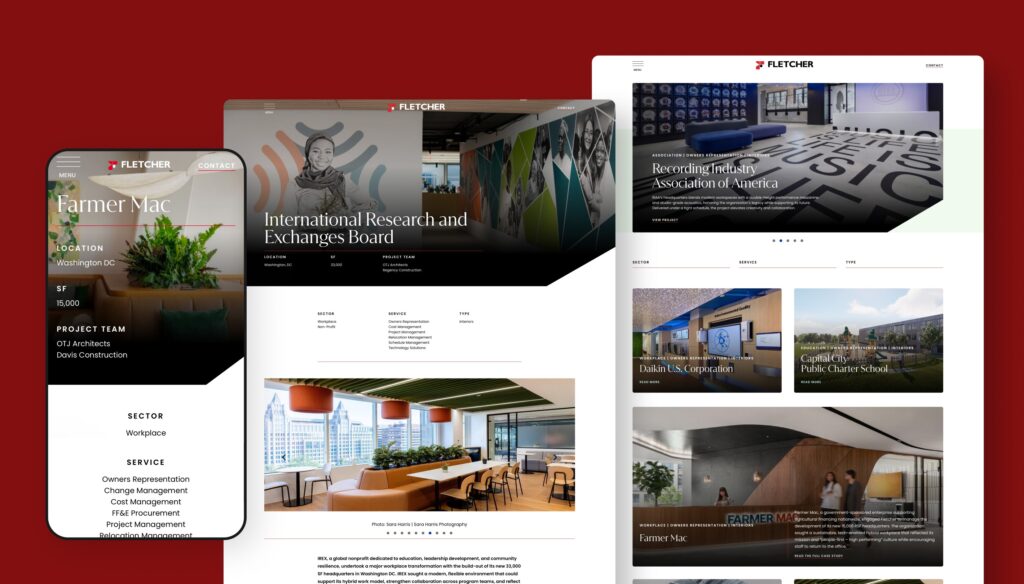
Fletcher Consulting, a Washington, D.C. owner’s representative firm, now has a portfolio that tells the story behind each engagement. It also showcases their work across higher education, multifamily, commercial and institutional projects, giving prospective clients proof of their capabilities before the first meeting.
Your reputation lives on other sites too
AI also learns about your firm from sources you don’t own, including industry rankings, trade publications, association directories, partner websites and LinkedIn. Keeping those profiles current ensures that when someone asks about your firm by name, the answer reflects who you are today. In most industries, a handful of outside sources carry the most weight, so it pays to find out which ones matter for your markets.
Measure what AI says about you
AI answers vary from one search to the next, so checking once won’t tell you much. A better approach is to track a consistent set of questions over time and watch how often your firm appears, which competitors show up beside you and what sources shape each answer. Once an improvement holds for about a month, you can count it as real progress.
Some of that influence won’t show up in analytics. A prospect who first hears about you from ChatGPT may later find you through Google, and that’s where the credit will land. Online visibility requires a broad approach and an understanding of the user journey throughout their search.
Ready to make the list?
The firms AI recommends tend to have the same things in common: a clear position, a website organized around their services and markets, and project stories that prove their expertise. That’s exactly what we help AEC firms build.
If you want your firm to be the one AI recommends, let’s start the conversation.