The Foundation.
Upgrade Your AEC Website from a Brochure to a Business Development Machine

Length
5 min read
Topic
AEC Website Design
For most architecture, engineering, and construction firms, the website has always played a supporting role. A place to send someone after the relationship was already in motion. But the way clients research and select AEC firms has changed, and a website that simply documents your work is no longer enough to win new business.
The Brochure Website and Why It Made Sense
The AEC industry has a long history of representing work on a website as they might in person. Essentially a digital pin-up board of featured projects. For decades, new business came almost entirely through relationships, referrals, and in-person conference circuits. Your website was a place to send someone after they already knew who you were. It was merely a validation tool, in that it confirmed what they’d already heard.
With more tools at the disposal of prospective clients to do their own research before a firm ever crosses their desk, and with an increasingly crowded AEC field all working for the same sectors, a new approach is needed.
Today’s clients arrive earlier, with specific questions: Have you done work like mine? Do you understand my constraints? Are you the kind of firm I want to spend the next three years working with? If your site doesn’t answer those questions quickly, they leave. And they usually don’t come back.
How Clients Actually Use Your Website
Before you can fix the problem, it helps to understand who’s actually visiting your site and what they’re looking for when they get there.
Most AEC firm websites have at least three meaningfully different visitor types that have almost nothing in common.
The pre-RFP researcher is a decision-maker or influencer who is actively building a shortlist. They may have gotten your name from a colleague, found you through a search, or seen you at a conference. They’re not casually curious, they’re evaluating. They want to know: do you have experience in their sector? Have you worked on projects at their scale? What is your firm’s philosophy, and does it fit their organization’s culture? They will make a judgment about your firm within minutes (or possibly even seconds) based on what they find.
The confirmation visitor already has a positive impression of you from a trusted referral source. They’re not starting from scratch; they’re looking for validation. If your site confuses them, disappoints them, or simply fails to reinforce the story they’ve already heard about you, you’ve fumbled a very warm opportunity.
The talent prospect is evaluating you as a place to build a career. They want to understand your culture, your project mix, your values, and what it might feel like to work there. In a competitive talent market, your website is a recruiting tool.
Most AEC websites serve none of these visitors well, because they’re mixing them all into a general, hypothetical audience rather than focusing on reaching each where they are at with the questions they need answers to most.
The Four Elements That Turn a Website Into a BD Tool
Rebuilding your website around business development doesn’t require starting from scratch. It requires shifting the organizing logic of the site from “here’s who we are” to “here’s what we can do for you.” These four elements are where that shift happens.
1. Audience Segmentation on Entry
Your homepage has one job: help visitors quickly identify that they’re in the right place and direct them toward content that’s relevant to them.
This means moving away from generic service-line navigation and toward meaningful entry points based on how your clients think about their own work. Not “Municipal” as a thin category, but as a sector landing page that speaks directly to the experience of, say, a state infrastructure director. Their procurement realities, accountability requirements, timeline constraints.
When a visitor lands on a page that describes their world accurately, something important happens: they stop evaluating and start trusting. They see that you can speak their language, know their challenges, and have found the solution before.
2. Project Proof That’s Specific, Not Just Visual
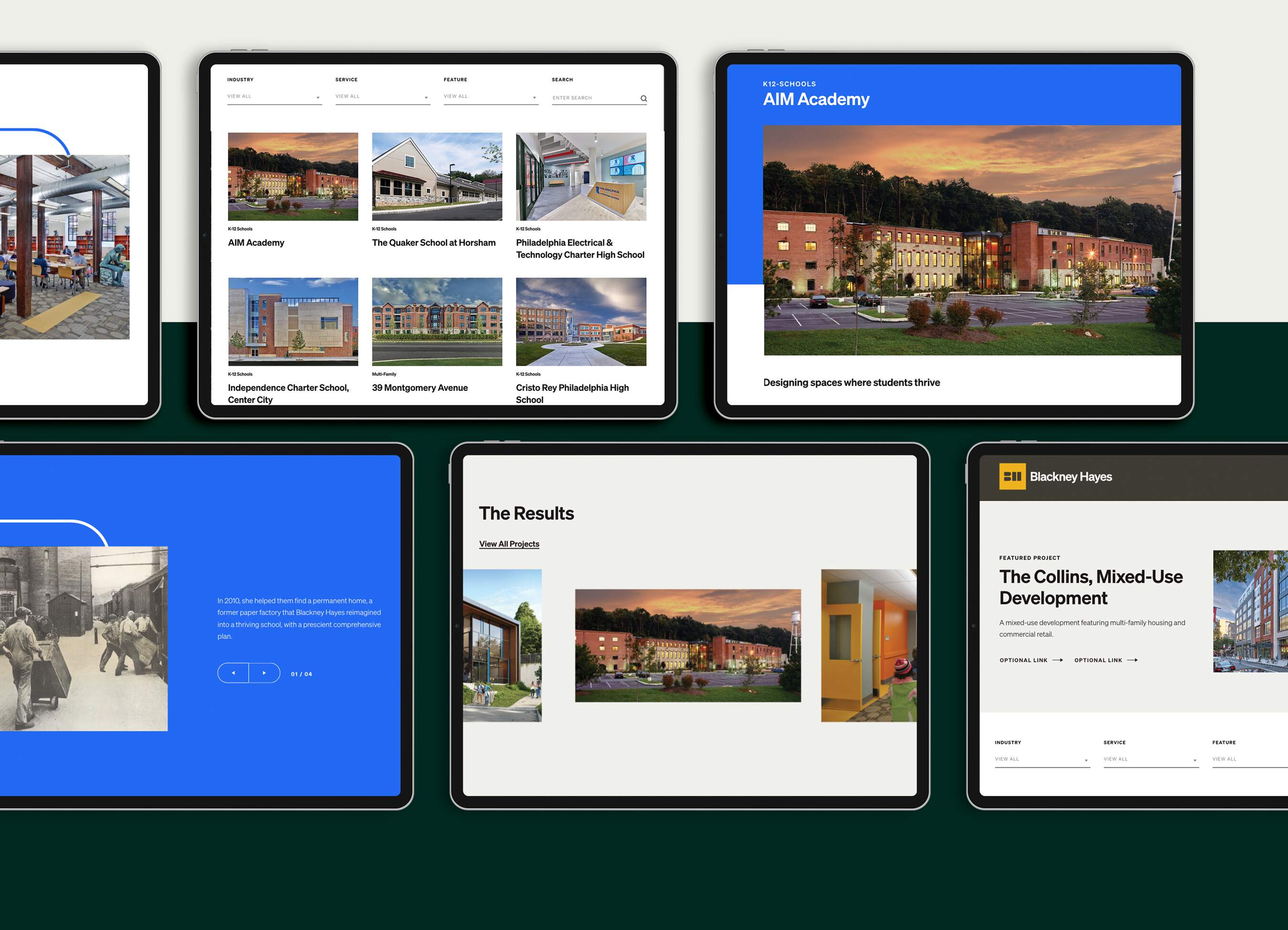
This is where the portfolio model breaks down most visibly. A stunning photo of a completed building is not proof of anything except that the building was completed and a photographer was hired. What prospective clients actually need is evidence that you understand problems like theirs and have solved them effectively. They want to understand the full story.
That requires a different kind of project content, more than just a photo gallery. A case study with structure and validation: What was the challenge the client faced? What made it complicated? What was your approach, and why? What was the outcome, for budget performance, timeline, community response, operational savings? What does the client say about the process and outcome directly?
Project details that shape to each story, but unify across visual language and content architecture, allow marketing teams to scale and prospects to learn. Want to take things up a notch? Consider adding a video to properly document the project from start to finish, and be sure to record testimonials from your client and your team.
3. Thought Leadership That Attracts Clients Earlier
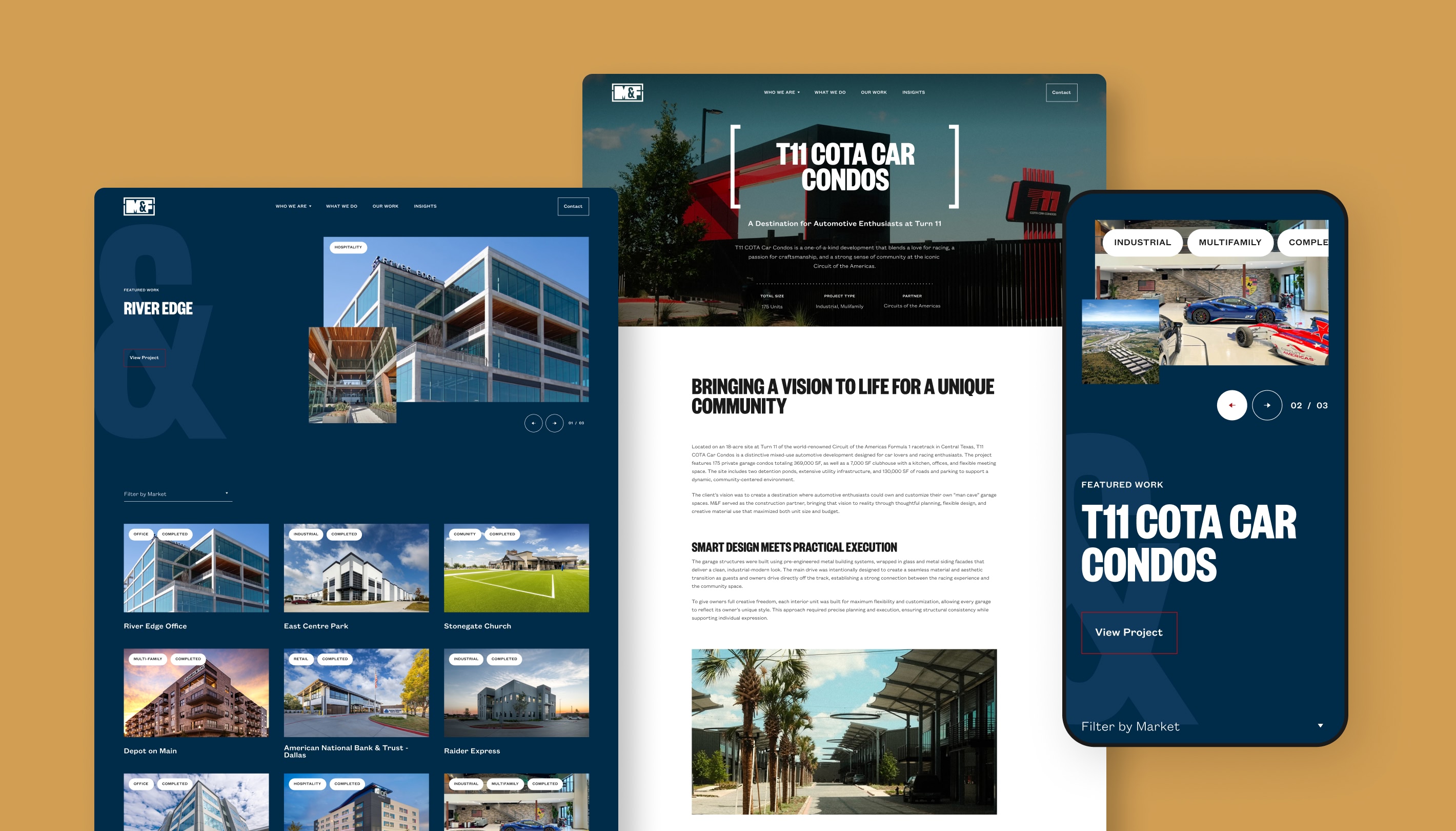
The most sophisticated business development move your website can make is to meet prospective clients before they’re even thinking about hiring a firm.
When a water infrastructure director starts researching challenges around aging infrastructure, is your firm producing content that answers those questions? When a healthcare system VP starts exploring what a major facilities renovation will require, is there a resource on your site that gives her a useful framework for thinking about it?
Content creation that’s genuinely useful, not promotional, not keyword-stuffed, but actually helpful to a specific person with a specific problem, positions your firm as a trusted authority before any RFP begins. By the time that prospect is ready to shortlist, you’re not a name on a list. You’re the firm that already helped them think more clearly about their challenge.
The keys to successful content? It needs to be niche, offer a unique perspective, demonstrate deep expertise, yet be relatively easy and enjoyable to read. The world is already full of too much generic, boring, keyword-stuffed content.
4. Measurable Ways to Build Relationships
Strong Business Development requires quantitative strategy. It is important to know a baseline of how often and where prospects are taking action, so that marketers can promote and improve on what is working. On a brochure site, a single office contact with a phone number and address takes away the opportunity to measure how much audiences are moved towards action based on the website. Even more so, it lacks personability.
In a strictly quantitative business, prospects would use a unified form that is regularly used and easily measured. In the world of AEC, where processes are long and built on relationships, we can’t over simplify and think a single form is best.
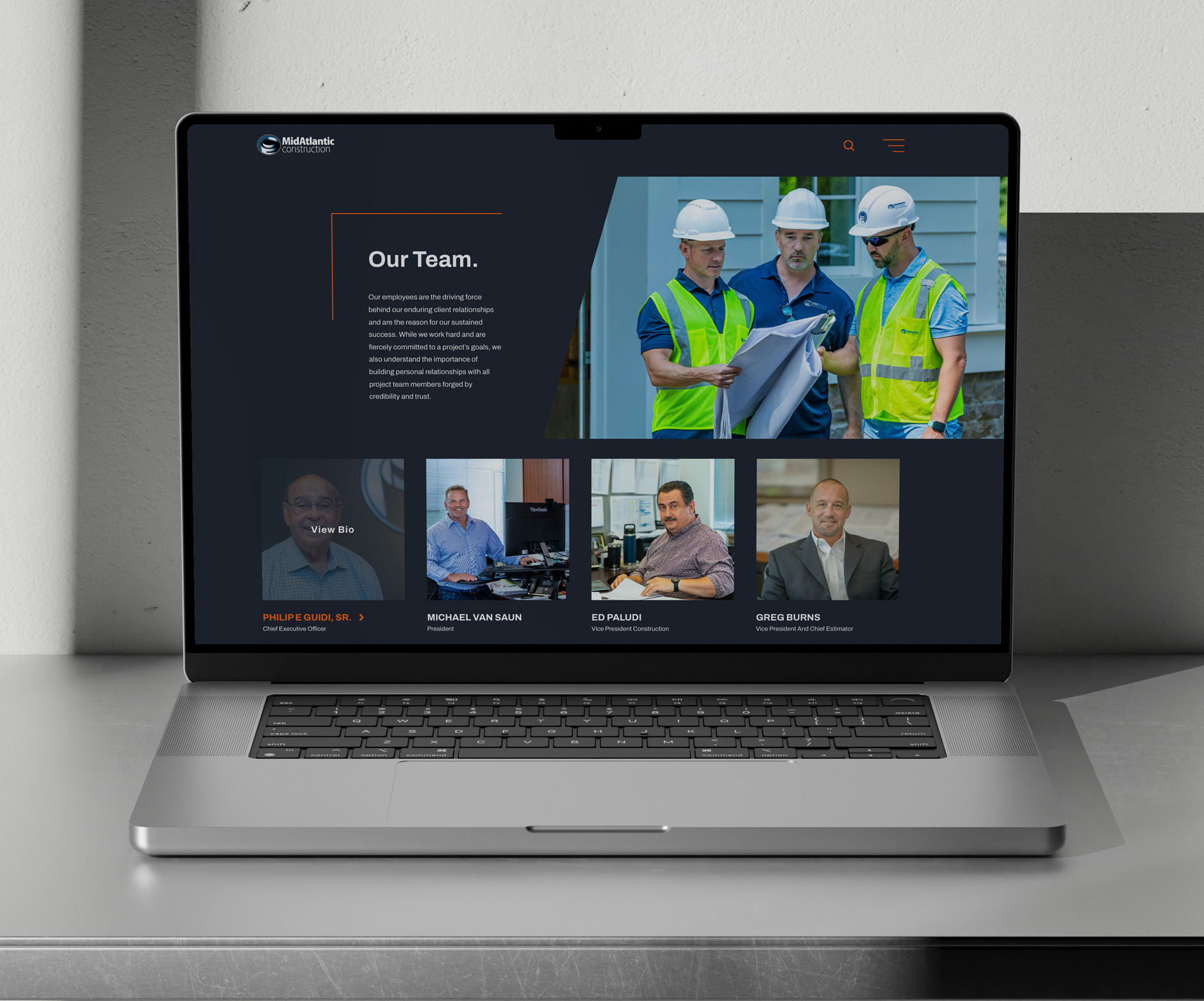
To entice measurable action requires connecting prospects to the specific people in their market or service that will grow into a trusted resource throughout sales. Creating ways to track contact to those people, through an email link or personalized form or clicks to LinkedIn, is one way to marry relationship building with measurable action. Let your BD team shine on their relevant pages so that prospects can click into more information on them and begin a relationship. Another avenue is through contact gathering through gated resource downloads and newsletter signups.
However an AEC firm chooses to measure action, it is always based around what serves an audience fastest.
The Website as the Beginning of a Conversation
Let’s say the same municipal infrastructure director visits your site. She arrives through a search for firms with water systems experience in her region. She lands on a sector page that opens with a description of the exact pressures her department is facing. She finds three project stories, each structured around the client’s challenge and the measurable outcome. There is a quote from a similar agency in another state who worked with you in the past to positive results. She sees the business development leader for that sector and looks up her LinkedIn, impressed with her tenure and past experience.
Three weeks later, when her department is formalizing its shortlist, your firm is already in the conversation. Not as a name someone mentioned, but as a firm that has already demonstrated it understands her world and has experienced leaders to work with.
That’s what a website built for business development does. It doesn’t replace relationships. It creates the conditions for better ones. The best AEC websites don’t look like marketing. They feel like the beginning of a conversation worth having.
Lastly, a word on SEO & AEO
You could invest in the perfect website redesign, but it won’t do any good if people can’t find it. That’s where search engine optimization comes in. And given the rapid rise of AI-driven search results, the landscape is changing quickly. While the post might be outdated within several weeks, the basic principles of effective SEO have stood the test of time and still apply. It all begins with brand positioning. If your AEC firm isn’t actually distinctive in any meaningful way, you’re going to be fighting dozens of other generalist firms for rankings. When it comes to branding, put a stake in the ground and stand for something. Own it.
Then, make sure your brand messaging is clearly communicated on your website. At a minimum, you need to communicate what you do, who you do it for, and what makes you better than everybody else. Assuming you are being authentic and your firm is actually unique and differentiated, you have a fighting chance of ranking well in SEO and AEO. Next perform keyword research to get a better understanding of what your prospective clients, future employees, and potential partners are searching for. Create keyword-rich (not stuffed) content that speaks to each core target audience and make sure your site is properly tagged and technically sound. If you have domain authority and your content answers people’s questions, your rankings in SEO and AEO will improve. That takes time, however, so you might need to consider paid advertising to see a more immediate bump in website visitors.
Want to learn more?
We’re here to help. We’d be happy to review your current site and discuss how we can help you level up and prepare your site for the future.